

The Work of Continuity
Rovos Rail and the long work of keeping trains moving across Southern Africa

You can learn a great deal about a person by how they look at a map. Some people see borders and obstacles—mountains, deserts, and the blank space between towns. Others see possibilities: places to go, routes to travel, and the sense that if you study the paper long enough, you might one day stand on the ground it depicts.
The first time I met Rohan Vos, he stood before a map of Africa tracing possibilities. His finger moved not along conventional tourist corridors but across freight routes, forgotten lines, and places where tracks once ran and where —if he had anything to do with it— they might run again. I had lived in East Africa and knew Rovos Rail by reputation, but it took me a few minutes to realize that the silver-haired man beside me was not a representative or an enthusiast. He was the Vos in Rovos.
We began, as people who love travel tend to do, with the map chatting about the multitude of stories contained within it. As he guided me across the southern part of the continent, I asked whether the track gauge was uniform. Not to test him, but out of the kind of curiosity you develop only after enduring a four-hour bogie change on the Trans-Mongolian, the southern spur of the Trans-Siberian. His eyes sparked immediately. Within seconds, he was sketching imagined diagonals across the continent, describing where a line could succeed if only someone had the patience, political stubbornness, or sheer optimism to see it through.
Somewhere in that exchange, I had the distinct thought: this man is playing the board game Ticket to Ride for real. Not nostalgically, but at scale. He was genuinely strategizing how trains might cross landscapes where infrastructure is tenuous, authorities unpredictable, and distances vast. He sees workable routes in places where most people see only obstacles. And he spoke with the kind of enthusiasm usually reserved for people who haven’t yet been told something is impossible.
But enthusiasm, as I would learn, is only one ingredient in the alchemy required to keep a railway alive in Southern Africa. A map can make anything look smooth. The ground, inevitably, complicates things.
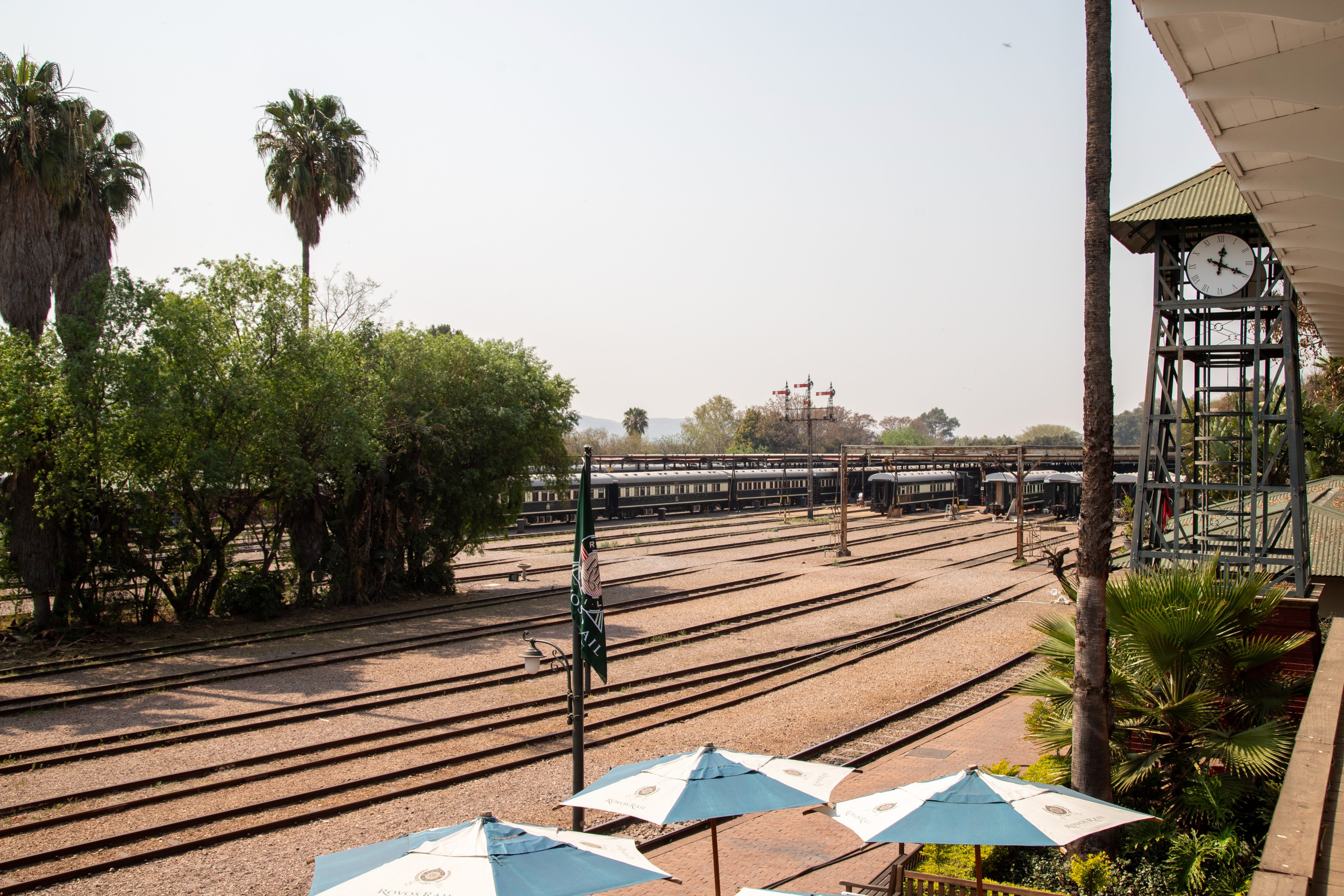
Six months after that meeting, I found myself in Pretoria, walking through the gates of Capital Park, the headquarters of Rovos Rail. Pretoria was bright and windless, the kind of Highveld morning where sound travels cleanly. I parked next to a sign that read Beware of Ostriches and set off in the opposite direction, figuring it best not to ruffle any feathers immediately on arrival.
It’s hard to believe now that the place was once derelict. In the late 1980s, when Rohan first saw the property, the tracks were buried in thistles and the buildings vandalized and hollow. He later said it “fitted like a glove,” which, given its state at the time, tells you something about his instinct for potential. Together with his wife, Anthea, he took on a long lease and began transforming what had been a steam depot into a working headquarters. What started as twelve acres of ruins has become sixty acres of workshops, offices, a station building for guests, and a museum—an operational base built gradually and at considerable expense.
As I lifted my camera toward a pair of peacocks perched in a nearby tree, Dave Madden appeared at my side. He wore a baseball cap and a crisp button-down; his posture relaxed in the way of someone who doesn’t need to hurry or explain himself. He followed my gaze upward.
“Plenty of peacocks around,” he said. “You’ll see more inside.” Then, with a nod toward the offices: “Let’s get you a hi-vis first.”
The coach maintenance and building workshop was cavernous, its steel roof stretched high above rows of track. Inside, passenger coaches sat at different stages of rebirth. Some were stripped back to bare metal and timber, paint sanded away in uneven patches. Others were further along, panels refitted and the first coats of the signature deep green exterior already applied. Scaffolding hugged the sides of the carriages. Tool carts and ladders neatly lined the platforms.
Workers moved steadily through the space. As we passed the cabinetry area, teams sanded panels that would soon be installed inside the coaches. “Everything is custom,” Dave said. The cabinetry, the upholstery, even the mattresses were fabricated on site. The work was careful and exacting, done by people clearly aware of both the complexity of the task and the expectations attached to it.
Above us, in the rafters, a flock of peacocks —eight, at least— stood watching from the beams directly over a half-finished carriage. Dave smiled when he saw me counting them. “They’ve been here a while,” he said, as if that explained everything.


We walked briefly over to the locomotive workshop, where a handful of engines were in various states of attention and rows of spare axles lay neatly nearby. Dave stopped beside a locomotive with the nameplate Shaun fixed to its front. He mentioned that Rohan had named some of the engines after his four children—Brenda, Bianca, Tiffany, and Shaun— names that had become part of the working vocabulary of the yard.
Walking between the engines, my eye caught a builder’s plate bolted low: Glasgow Locomotive Works, 1893. It was a quiet but humbling detail. Rovos Rail operates within a lineage older than its founder, and one that clearly extends beyond him. The work was less about preservation than persistence—keeping engines serviceable, routes negotiable, and trains moving in a system that rarely stays still.
Dave explained that several of the locomotives had been sourced from Australia over the years, the Cape gauge matching and the engines available when others weren’t. In a place where ideal rolling stock is often theoretical, availability counts.
It struck me as a peculiarly ambitious form of practicality: when the right locomotives didn’t exist close to home, they were willing to imagine them arriving by ship, and then deal with everything that followed.
From the locomotive workshop, we looped back toward the operational buildings—the quieter center of the railway, where planning and oversight take precedence. This was where I met Joe.
Joe has been with Rovos Rail for thirty-six years. The length of time shows in how he works rather than how he talks about it. He reads the railway the way some people read weather systems: through pattern, timing, and what is likely to happen next. His office was modest, but his monitor carried the scale of the operation.
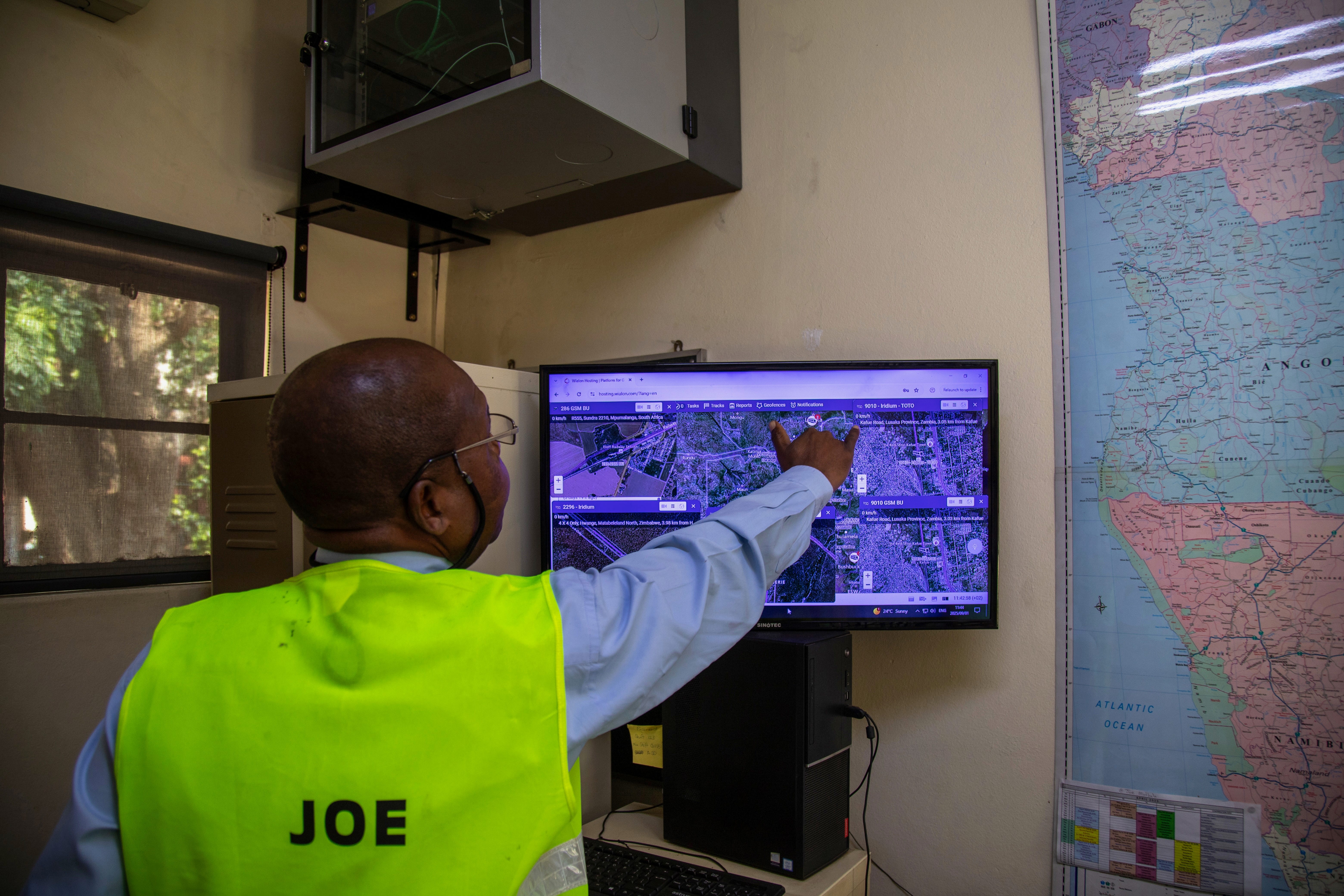
At any given time, he explained, there are multiple Rovos trains moving across Southern Africa —spread out across thousands of kilometers, crossing borders, passing through long stretches where mobile coverage simply doesn’t exist. In total, the operation currently employs around 480 staff. Most guests never see them; some are on the trains, sure, but many are content working here behind the scenes.
The screens mattered precisely because the trains themselves are deliberately disconnected. No Wi-Fi. No cell service for passengers. That absence is part of the experience, days measured by landscape and conversation rather than notifications, but there is still the need for people watching from afar. GPS tracking fills the gap, offering a continuous, quiet assurance that each train is where it should be, moving as expected.
As we stood there, Joe checked his watch and rubbed his chin, noting that one of the trains in Zambia was two minutes late leaving the station. He waited. A moment later, a speed reading appeared beside the icon.
Joe described how different it had once been. Before satellite tracking, updates came intermittently, sometimes after long stretches with no information at all. The margin for uncertainty was wider then, and decisions were made with less data and more judgment. Technology hadn’t replaced that judgment so much as narrowed the gaps around it.
The difficulty was never simply distance, but the conditions trains pass through: national rail networks built for freight rather than passengers, stretches of track that receive uneven maintenance, long gaps without communication, and, in South Africa, cable theft that can halt traffic without warning. These are not crises so much as facts of operation. Maps compress them into clean lines. The work happens in everything those lines leave out.
Later, Dave showed me a photograph on his phone: a section of track in the Democratic Republic of Congo, where the rails wandered in and out of alignment. It was the inverse of Rohan’s careful diagonals on the map months earlier. Dave glanced at it once more before sliding the phone away. There was always work to be done.
What the photograph clarified was how difficult the ground can be. Tracks like these still have to be crossed. Everything else I had seen —the custom-restored coaches, the imported locomotives, the screens in operations, the coordination with national rail authorities— exists in response to that basic fact. Continuity cannot be assumed; it must be built.
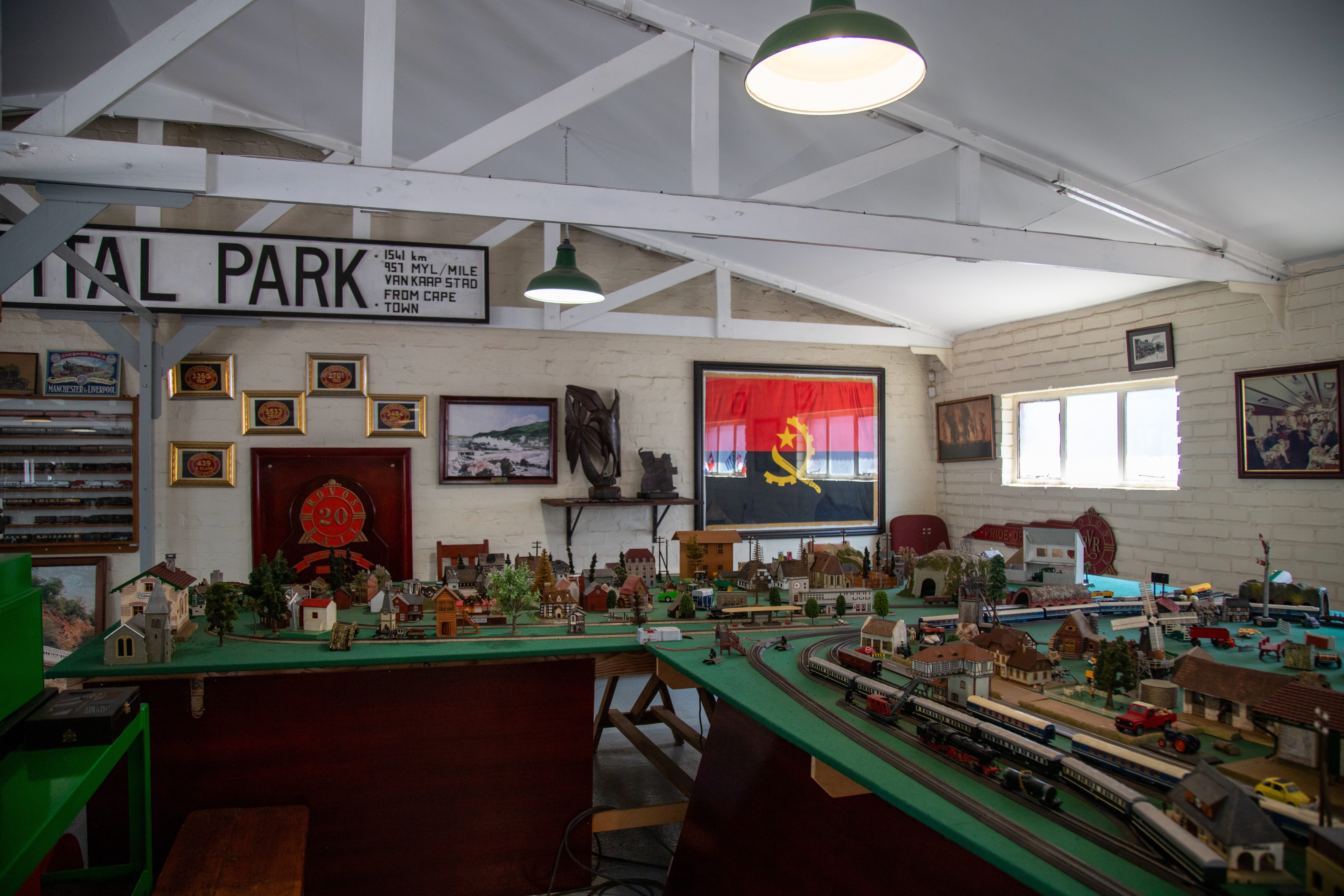
The museum sits a short walk from the operations buildings, a small red-brick structure that functions less as a showcase than as a working archive. Inside, the order is deliberate. Glass cases hold menus, timetables, and route diagrams. Model trains sit in glass cases, one still running its circuit. The collection extends beyond Rovos Rail itself, drawing in artifacts from rail history across the region. Nothing is arranged theatrically. Nothing pushed toward sentiment.
On one wall, a locomotive nameplate hung on its own: Tiffany. Dave noticed me looking at it and explained, casually, that it would go back onto one of the engines outside once the work in the yard was finished. There was no ceremony attached to it, no caption explaining its significance. It wasn’t being preserved. It was waiting its turn.
By the time I left Capital Park, work was still continuing in the yard, without pause. There was nothing to mark the moment.
A few days later, far from Pretoria, I saw the result.
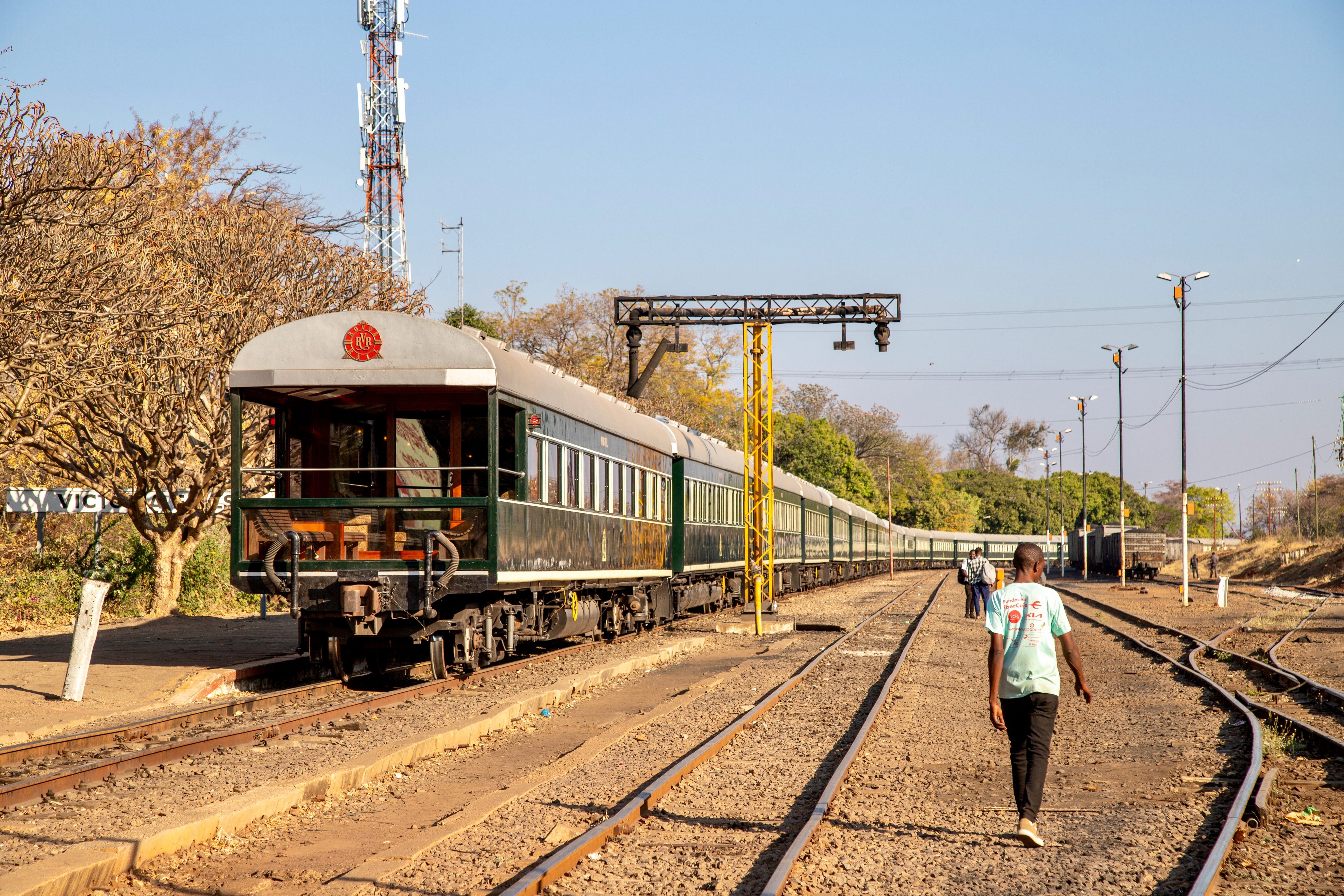
At Victoria Falls station, just before dusk, the Rovos Rail train sat quietly. I hadn’t come looking for it. I was crossing the tracks when the green carriages registered, familiar in a way they hadn’t been before. The train was paused, mid-journey, taking on guests before setting off again that evening.
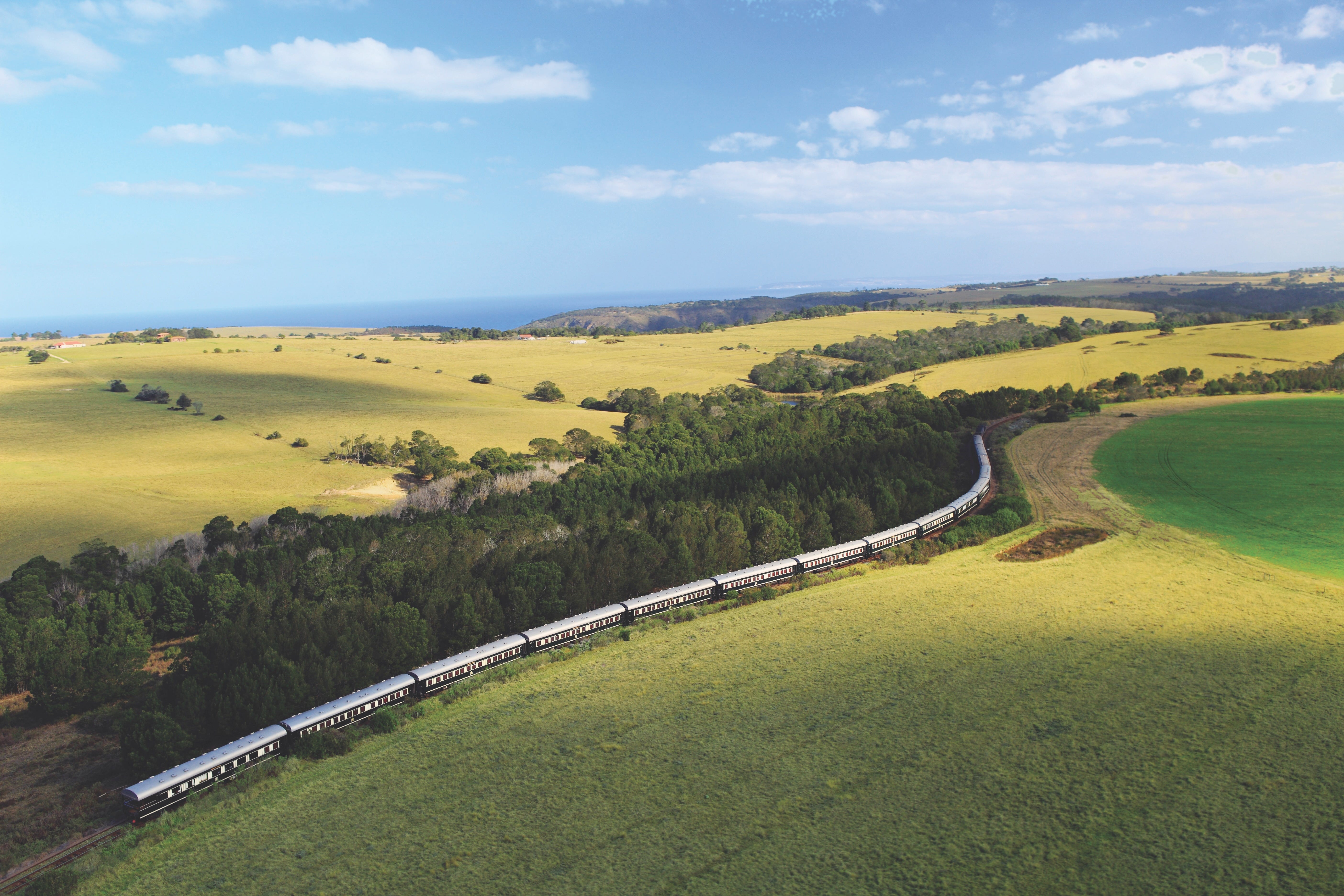
Only later did I understand how long it had already been moving. That single train had left Pretoria on June 30 and, by the time I saw it, had already crossed and recrossed much of the southern half of the continent: Pretoria to Cape Town, Cape Town to Dar es Salaam, Dar to Lobito, back again, looping through roughly nine countries. It would not return to Pretoria until mid-September. Weeks still lay ahead.
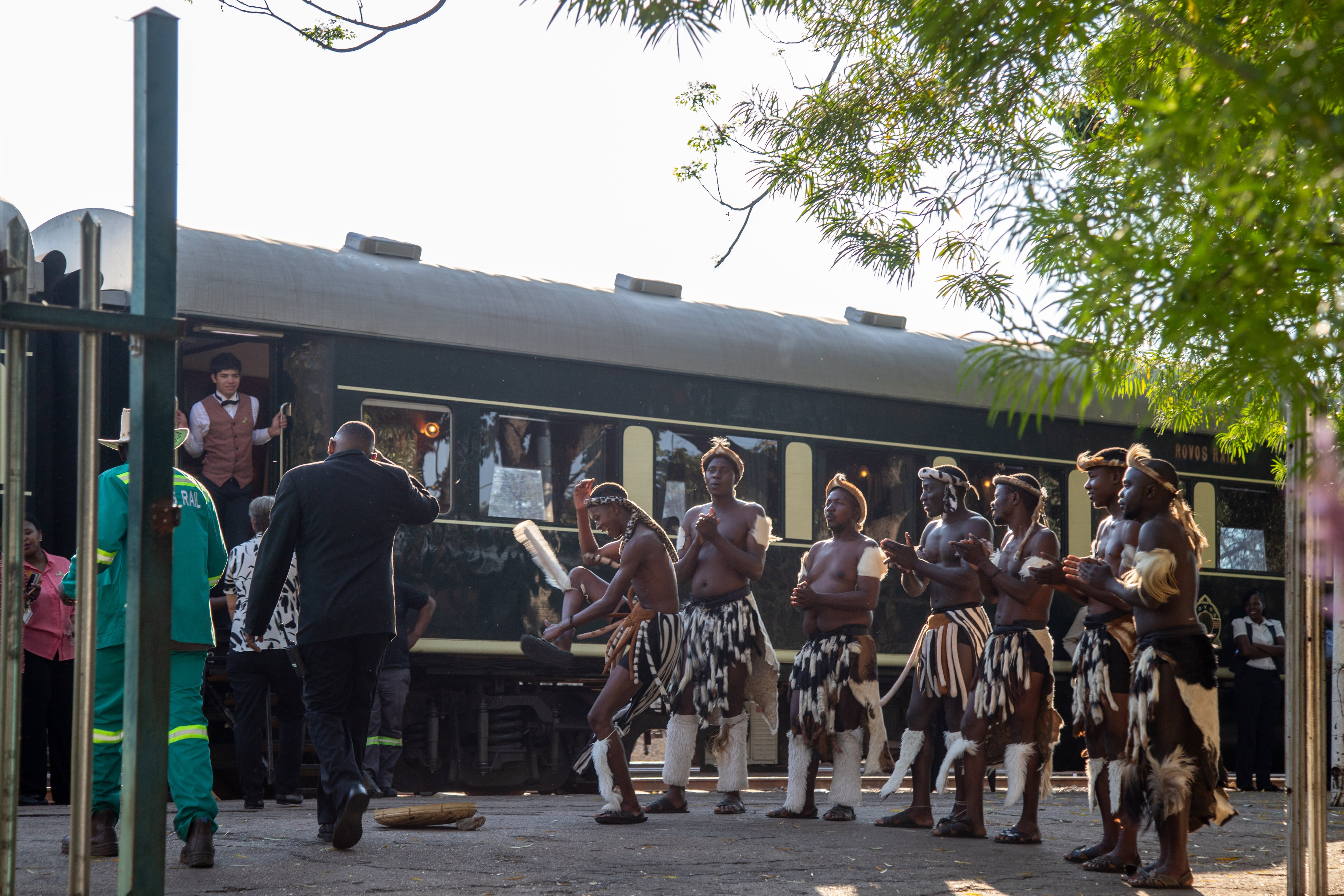
On the platform, a group of local performers had assembled in a loose semicircle. They were bare-chested, dressed in hide and beadwork. As guests filtered back toward the train, the dancers stepped forward, stamping and clapping, singing in call-and-response.
I sat on a bench and watched. The train remained still behind them, its dark green sides absorbing the movement. Guests paused, unsure whether to film or simply stand. A few clapped, a little awkwardly.
Sitting there, I thought back to Rohan and the map I had first seen him trace, and to the hands I’d watched at Capital Park —grease-stained, sanding wood, painting car exteriors— that had carried that idea this far. This was where all of that work surfaced.
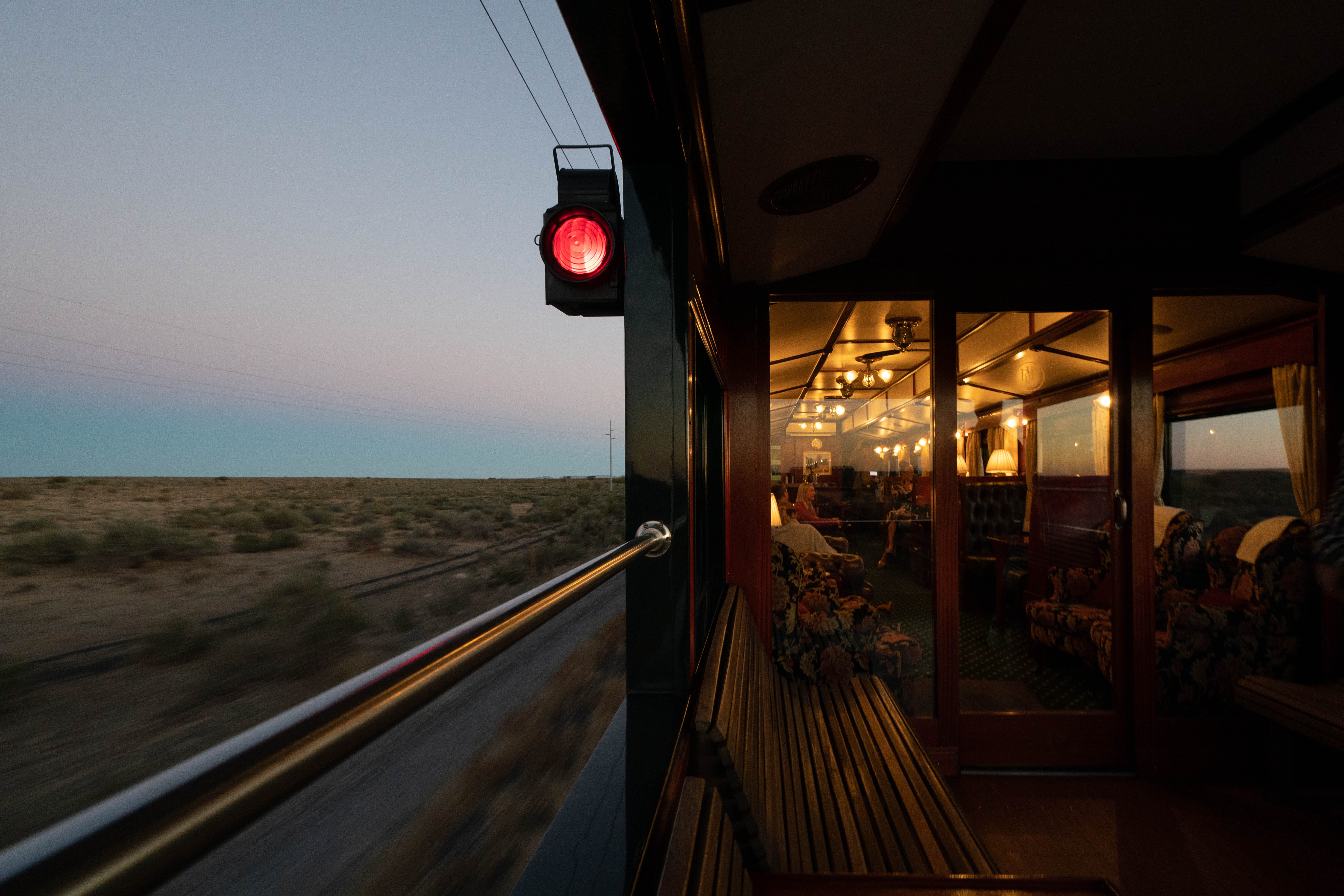
The luxury on offer here had very little to do with polish or space or silverware on its own. It rested on continuity: the fact that a train could leave Pretoria in early winter, cross borders that don’t always agree with one another, move over infrastructure that shifts beneath it, and still be here months later, paused briefly at the platform, before continuing on.
I didn’t wait for it to depart. I stepped back from the platform and walked on, leaving the train as it was, between one stretch of track and the next.
A few weeks after Victoria Falls, I encountered the name Vos again, this time far from any track.
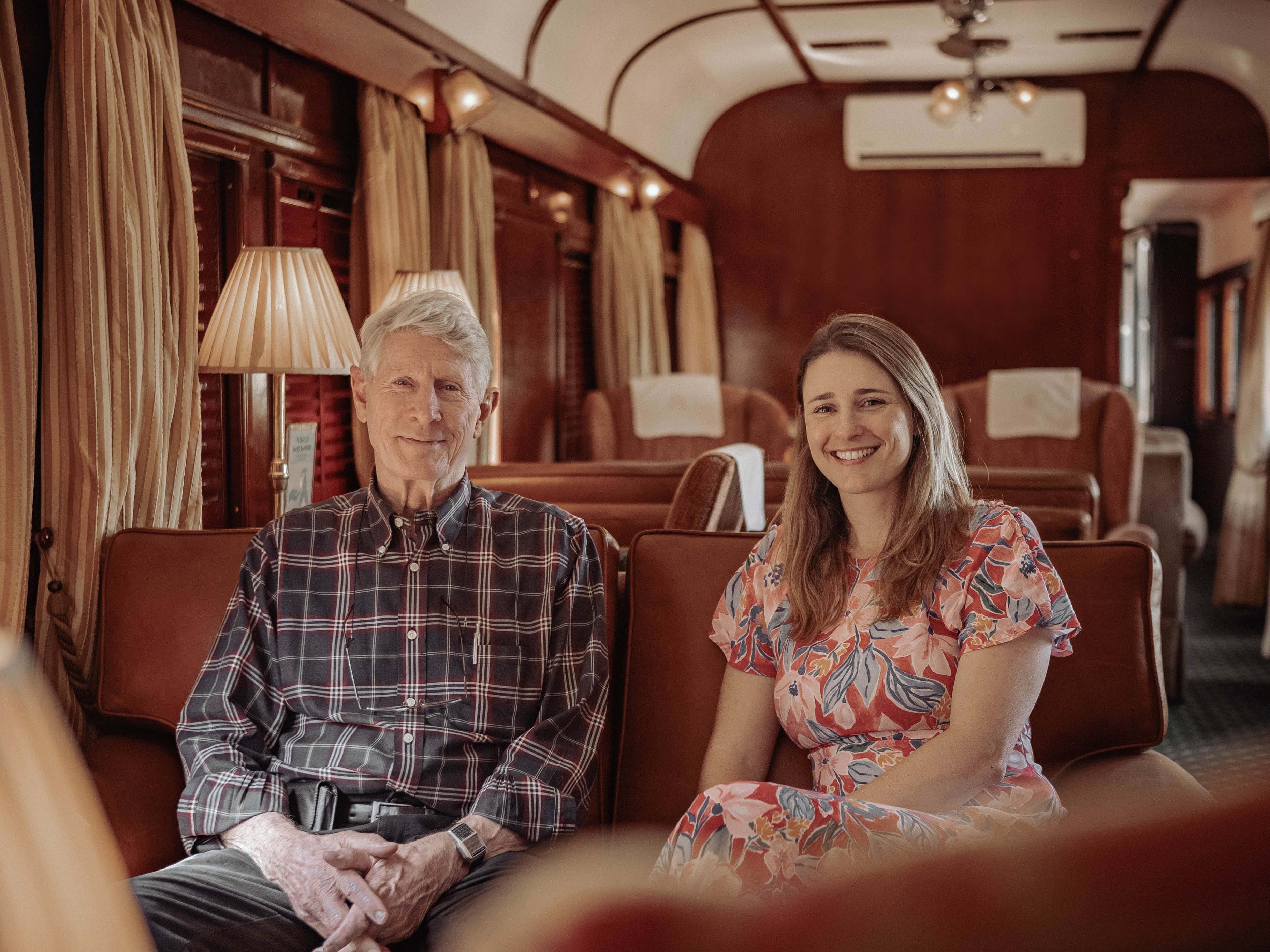
I met Tiffany Vos in London in early November, at the World Travel Market, where Rovos Rail was exhibiting. She was standing behind the display, straightening a stack of brochures before the day began. Tiffany Vos, the company’s Chief Operating Officer.
The setting mattered. More than thirty years earlier, it was this same trade fair that had helped keep Rovos Rail afloat at a moment when it might easily have failed.
We spoke for about fifteen minutes, amid the low hum of conversation and passing traffic. The conversation moved easily —about my visit, about her father, about the routes— without formality. When I asked about future journeys, she stepped toward the map behind the stand and began tracing lines with her finger, pausing, adjusting, testing how they might work. It was a gesture I recognized.
What stayed with me afterward wasn’t anything she explained outright, but the sense of continuity in how she approached it: attentive, grounded, unshowy. The same care visible on the ground at Capital Park —ideas shaped not for effect, but for use.
Outside, London moved on. Buses pulled away. Pedestrians threaded past one another. Far to the south, across multiple borders and stretches of uneven track, green trains were still moving, their progress shaped not by spectacle but by steady attention on the ground below. 🚂
Fine writing. Love the opening paragraph. Sets it all up nicely
Fascinating