

A Land Before Time
Among dragons and drifting reefs, control is an illusion

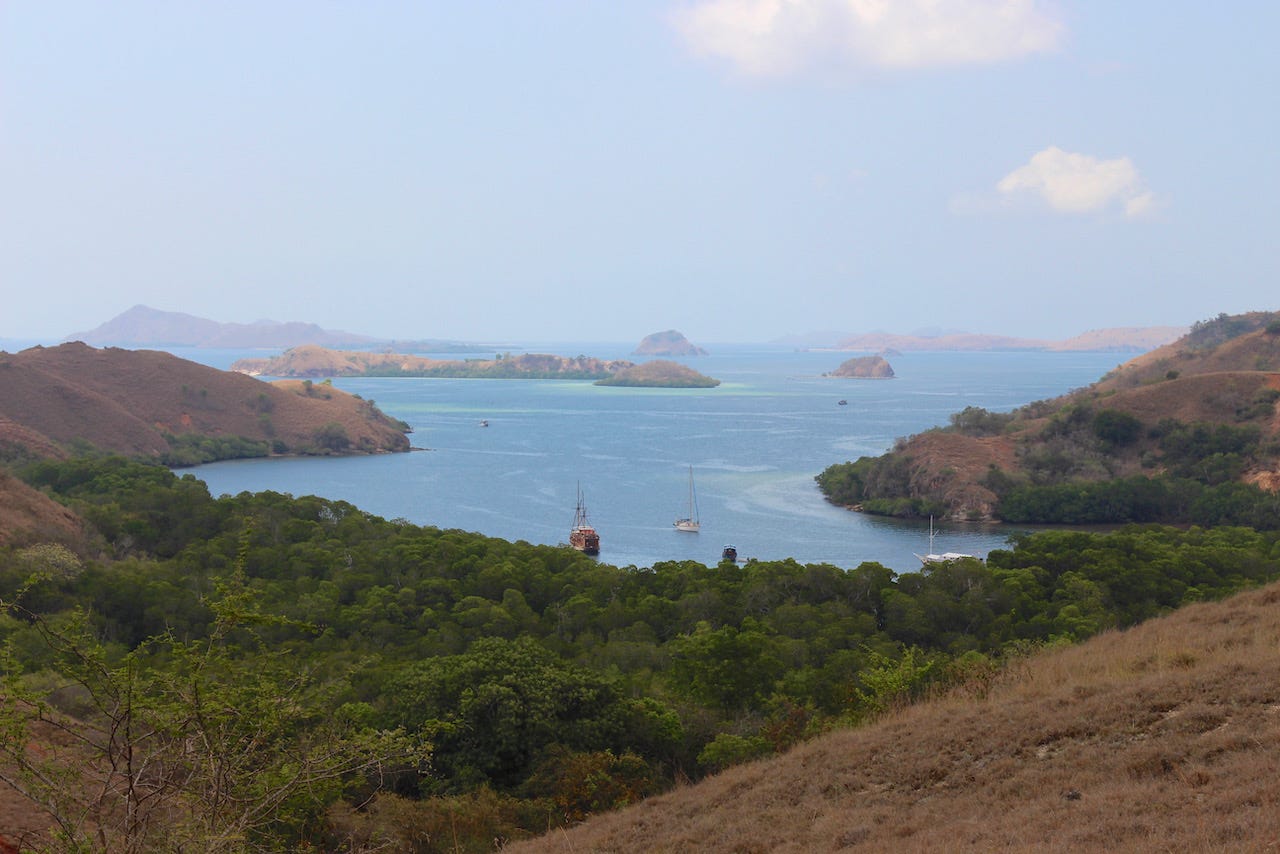
“Do you know when we will return?” I asked.
The man at the dive shop didn’t look up right away. He finished stacking a few papers, aligned them carefully, then glanced at me.
“Why?” he said. “Do you have other plans?”
“Well, no,” I said.
He nodded once, as if that settled it, and went back to what he was doing. The conversation was over.
“See you tomorrow,” I added, though it felt unnecessary.
I was in Labuan Bajo, on the western edge of Flores, a place that until recently had been little more than a fishing town at the end of the road. When we arrived in 2015, it had a population of around 6,000 people. The airport had just partially opened, a low terminal that felt less like infrastructure and more like a signal that something was about to happen here.
My wife and I had been there long enough to know the man at the shop wasn’t dismissive. The question just didn’t fit the place. Boats left when they were ready; things took as long as they took.
“So how does it feel,” my wife said as we walked back, “to be the Diva of Labuan Bajo?”
I hadn’t meant it that way. I was trying to get a sense of when I might be back, for her sake —she’d be staying in town while I headed out diving in the marine park. But here, the question didn’t land. The nickname stuck.
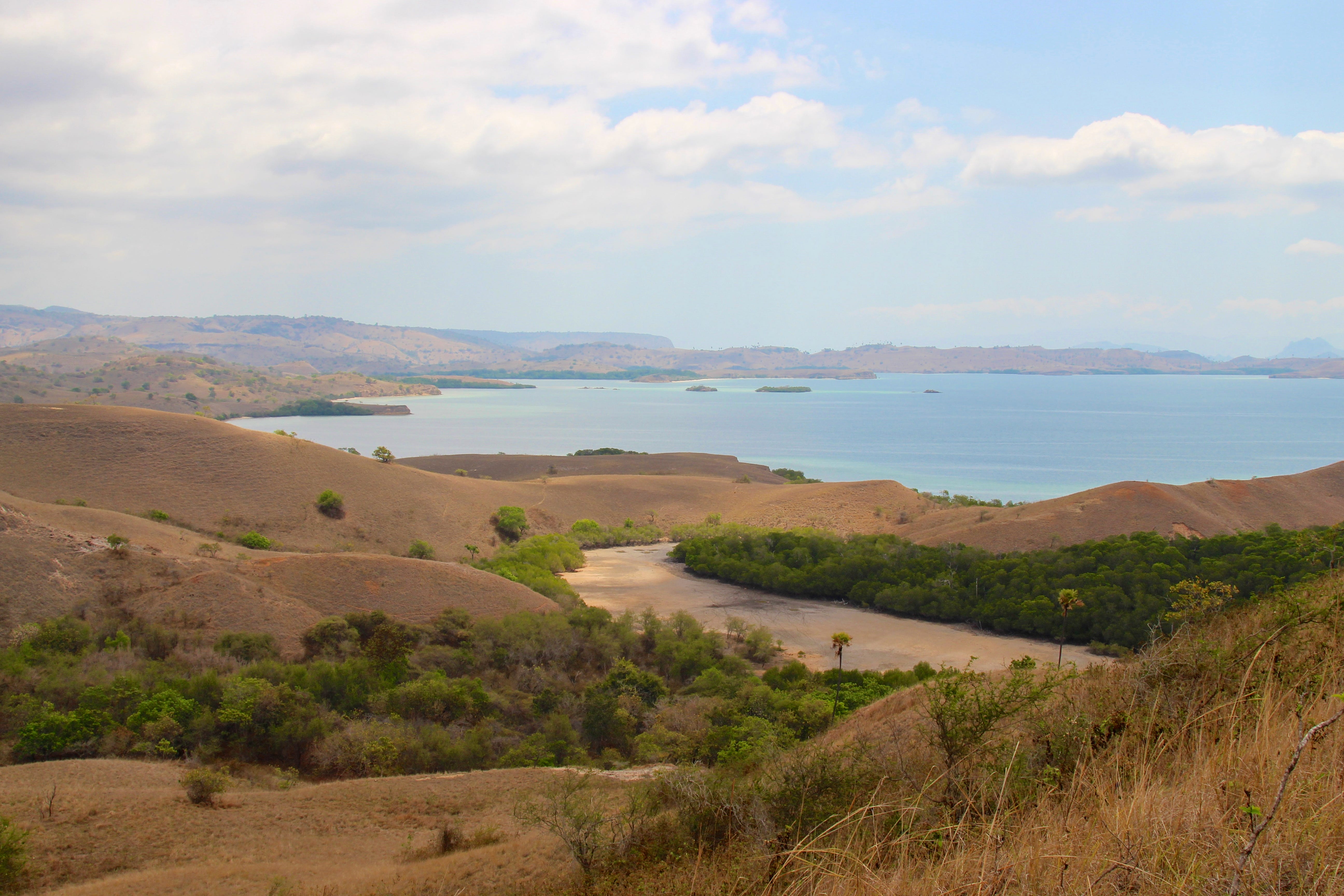
We had come for Komodo National Park, a stretch of islands and water set between Sumbawa and Flores. Established in 1980, it was created to protect the Komodo dragon. It was later designated a UNESCO World Heritage Site, its scope expanded to include the surrounding marine environment.
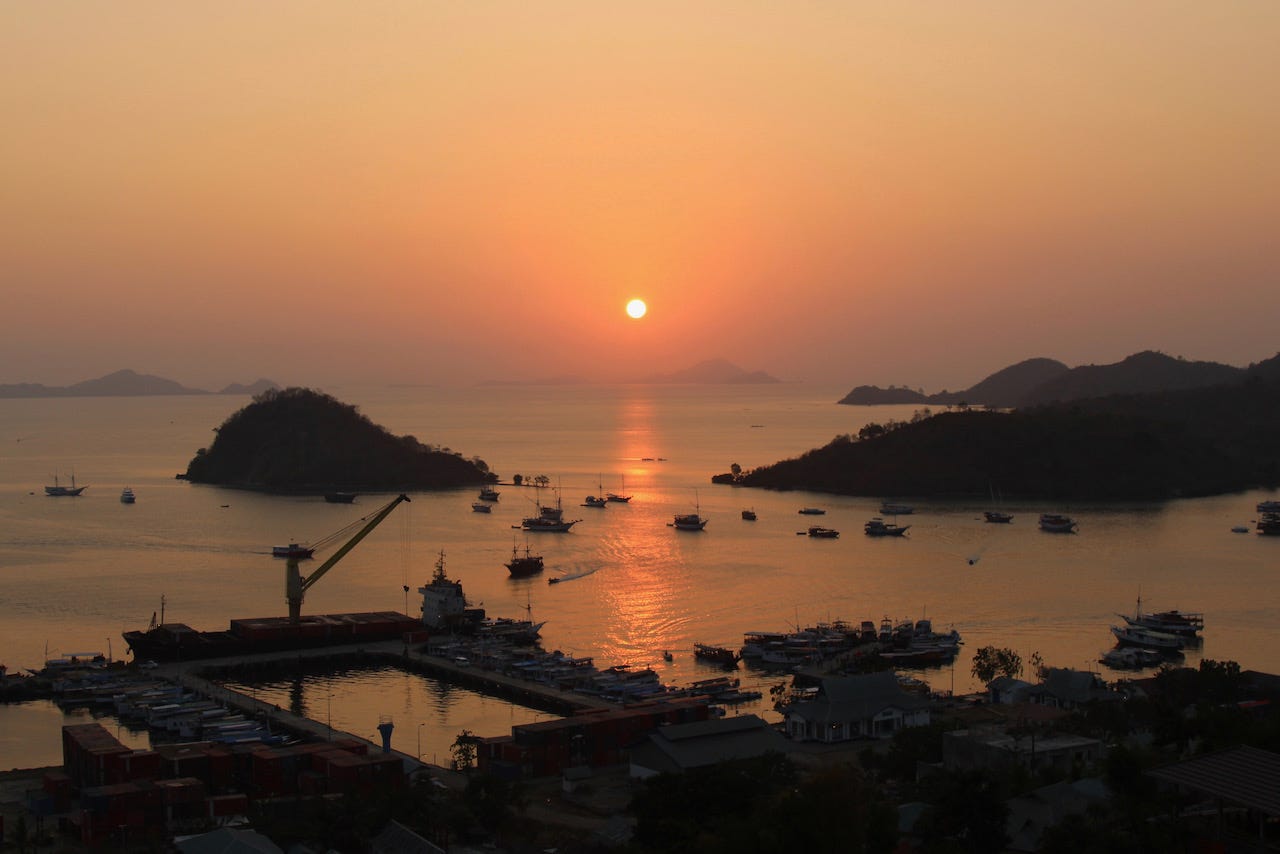
None of that was visible from town. Labuan Bajo faced west, toward open water, its harbor lined with wooden fishing boats, small cargo vessels, and the occasional liveaboard preparing to leave. The islands sat low on the horizon, their outlines fading in and out with the light.
Getting to them required time. Two to four hours by boat, depending on conditions. A few days earlier, we had walked down to the harbor before the heat settled in. The boats were already there, paint worn from the sun and salt. Our driver waved us over as his wife loaded a cooler of homemade food onto the boat.
The ride out took a few hours. The islands appeared slowly, dry and uneven. There was no clear boundary where the park began. Only the absence of fishing boats and a brief comment from the guide marked the change.
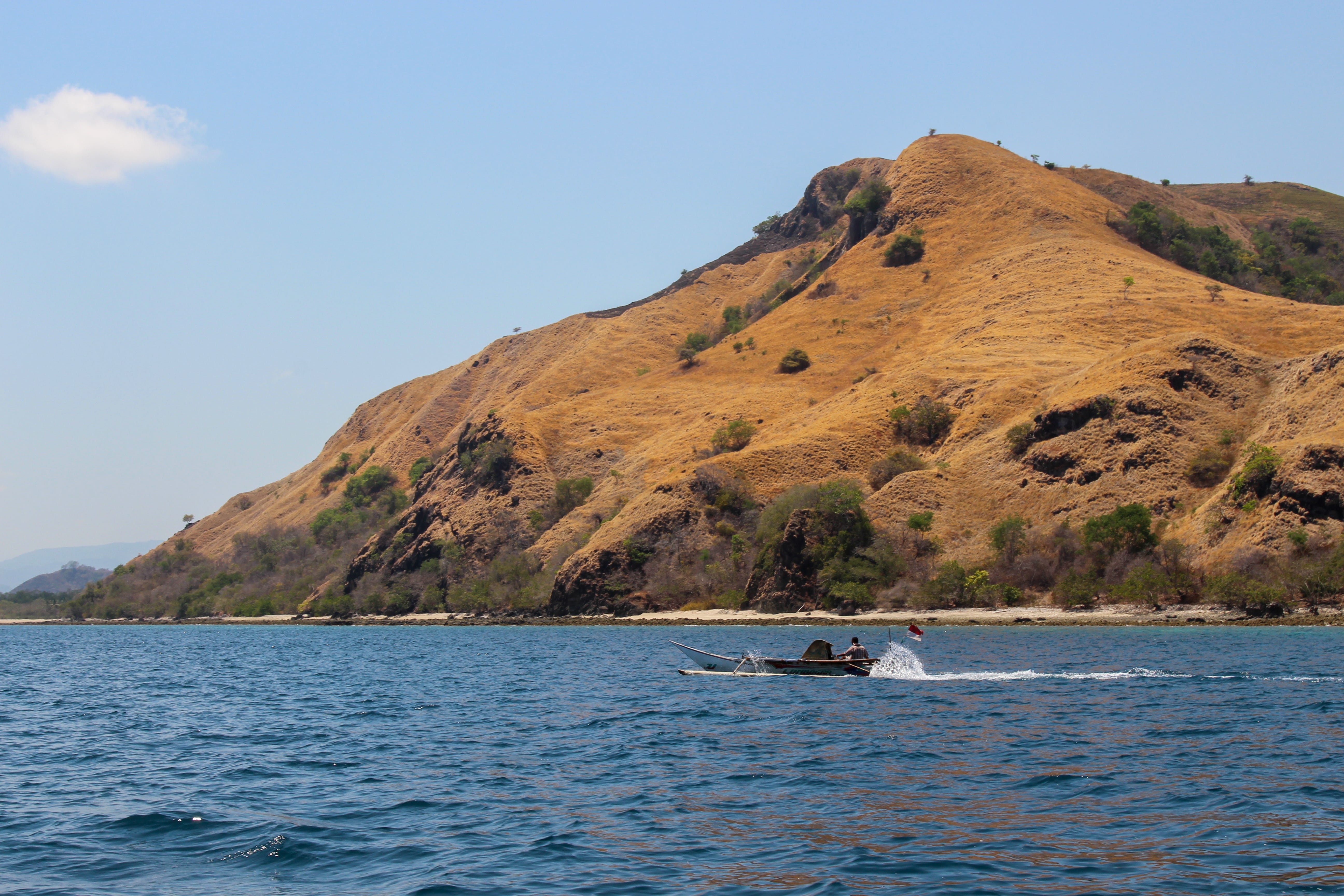
When we reached Komodo Island, the largest of the three major islands, the boat idled near a wooden dock. A guide met us there holding a long wooden stick, forked at the end. Only after we stepped onto land, and the boat pulled away, did he say it was for protection.
I hadn’t told my wife what this would be like. I had said we were going to see the Komodo dragons. I think she pictured something contained: a path, a railing, a safe distance.
She looked at me, then at the stick.
I nodded.
This was our protection.
Komodo dragons can grow over ten feet long (3 meters) and weigh more than 150 pounds (70 kg). The guide advised us against getting bitten; their bite delivers venom that prevents blood clotting and can send a victim into shock. It wouldn’t be handled there. It would mean a long boat ride back, then an air evacuation to the nearest hospital that could treat it.
We followed the guide inland, the three of us moving first across bare ground with a scattering of trees.
It didn’t take long to see one.
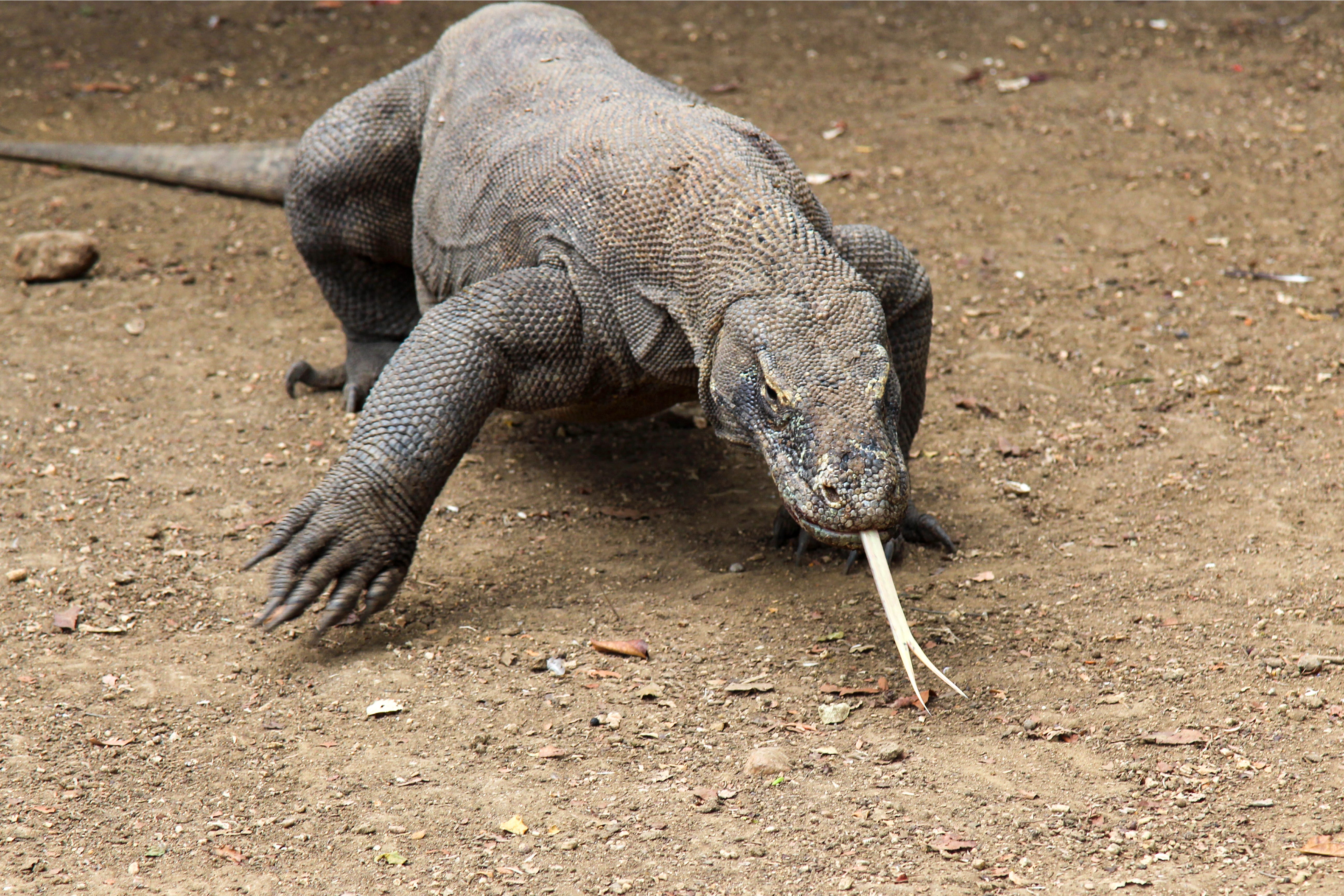
A dragon lay in the shade, its body stretched along the ground. It was larger than I expected, low to the ground, and heavy. It didn’t move much when we approached. It lumbered forward slightly, tongue flicking, then settled again. We stood there for a moment, close enough to understand its size. The guide squatted down and held his stick in front of him, watching like a golfer lining up a putt. The guide asked my wife if she wanted to turn her back to it so he could take a picture.
We kept walking.
At one point, the guide mentioned that you always bring the stick even for something as simple as going to the bathroom. Rangers sleep on the island, he said, and they don’t go anywhere without it. Once, he’d opened the outhouse by the docks and found a dragon inside.
As we moved farther inland, the ground gave way to open grassland. My wife stayed between me and the guide and our sticks. At one point, when the guide had drifted a few steps ahead, she looked at me and asked what exactly I thought I was going to do with it if a dragon started to rush.
I told her I wasn’t sure, but holding it, in a landscape like this, made me feel like Gandalf. Perhaps, then, I could plant it in the ground and yell, “You shall not pass!”
She didn’t find that reassuring.
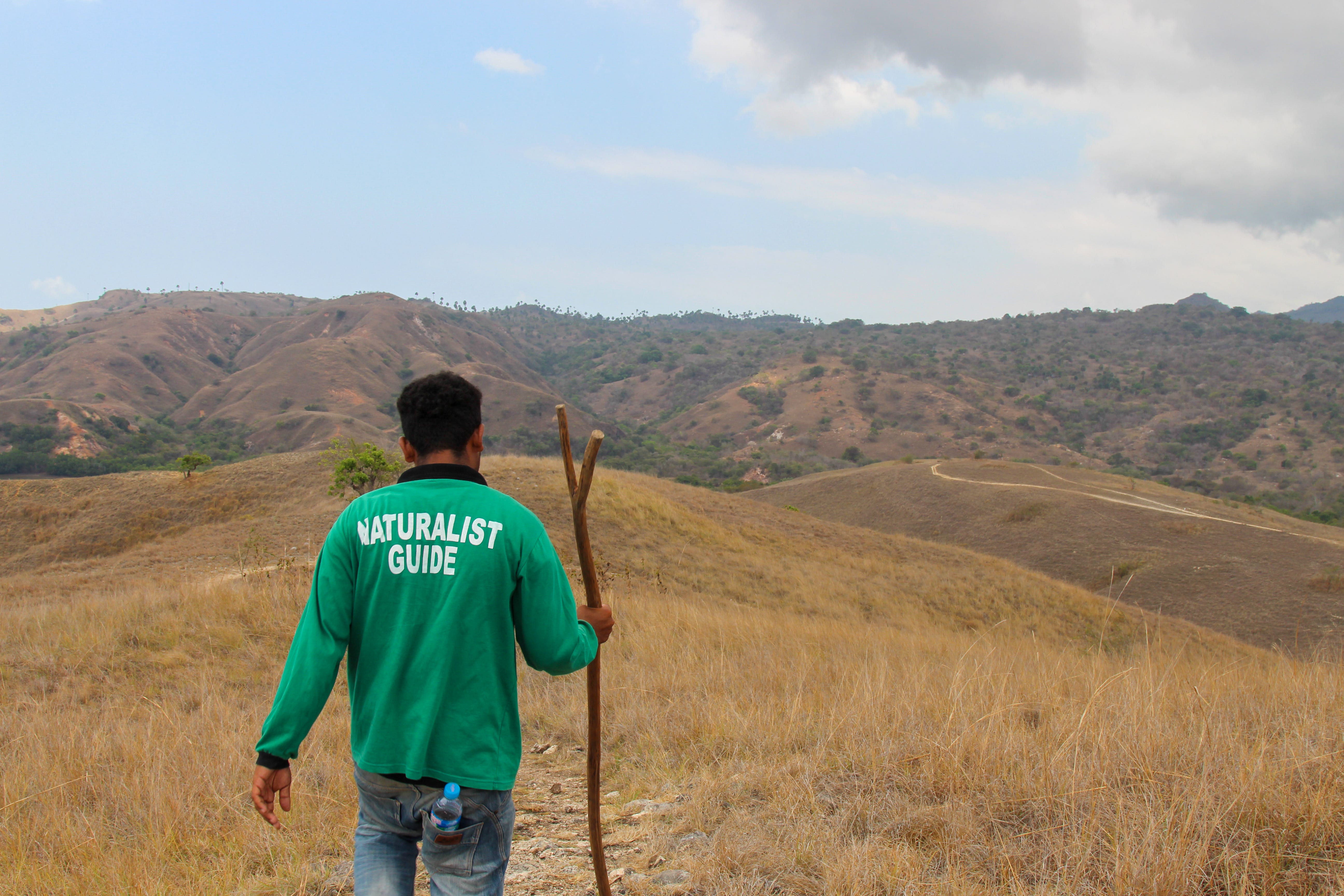
The path narrowed as we continued, cutting through dry grass that brushed against our legs. No other groups, no voices carrying across the hills. Only the sound of our steps and the wind moving through the brush.
The guide stopped once and pointed ahead. We saw Timor deer moving through the grass below us, their heads lifting as they moved. Farther off, a water buffalo stood under a tree. The guide said the dragons take deer most often, but will also hunt wild boar and scavenge when they can.
When we reached higher ground, the view opened out over the island. Dry hills, pale grass, the sea in the distance. When I looked down, all I could see were the boats anchored off the coast—the only sign of where we had come from, and where we would return. The dragons trace back millions of years, long before anything like those boats existed here.
We didn’t see many others. Maybe a few people near the dock, but once we started walking, it was empty again. There was no schedule to the visit, just the hiking route we chose and the hours it took to complete it. You could not stay on the island. There were no accommodations, only liveaboards anchored offshore and smaller boats returning to Labuan Bajo.
By the time we returned to the boat, nothing had happened in the way you expect things to happen. No sudden movement or single moment to isolate, but it didn’t feel like anything was missing.


At the time, fewer than 90,000 people visited each year. It was not untouched, but it was not built for volume. Getting there still required multiple flights, then the boat. The airport in Labuan Bajo had only just opened. Most people passed through on longer liveaboard itineraries rather than cycling in and out on fixed itineraries. The only real constraint was the boat.
Visitor numbers have climbed past 300,000 annually. Labuan Bajo has grown with it, from a fishing town into a staging point, with direct flights from Bali and Jakarta and boats leaving on set routes into the park. In response, Indonesia is moving to limit access. A daily cap of 1,000 visitors is set to take effect in April 2026, with entry booked in advance and divided into time slots.
What we experienced had no visible edges. The newer system, by definition, does.
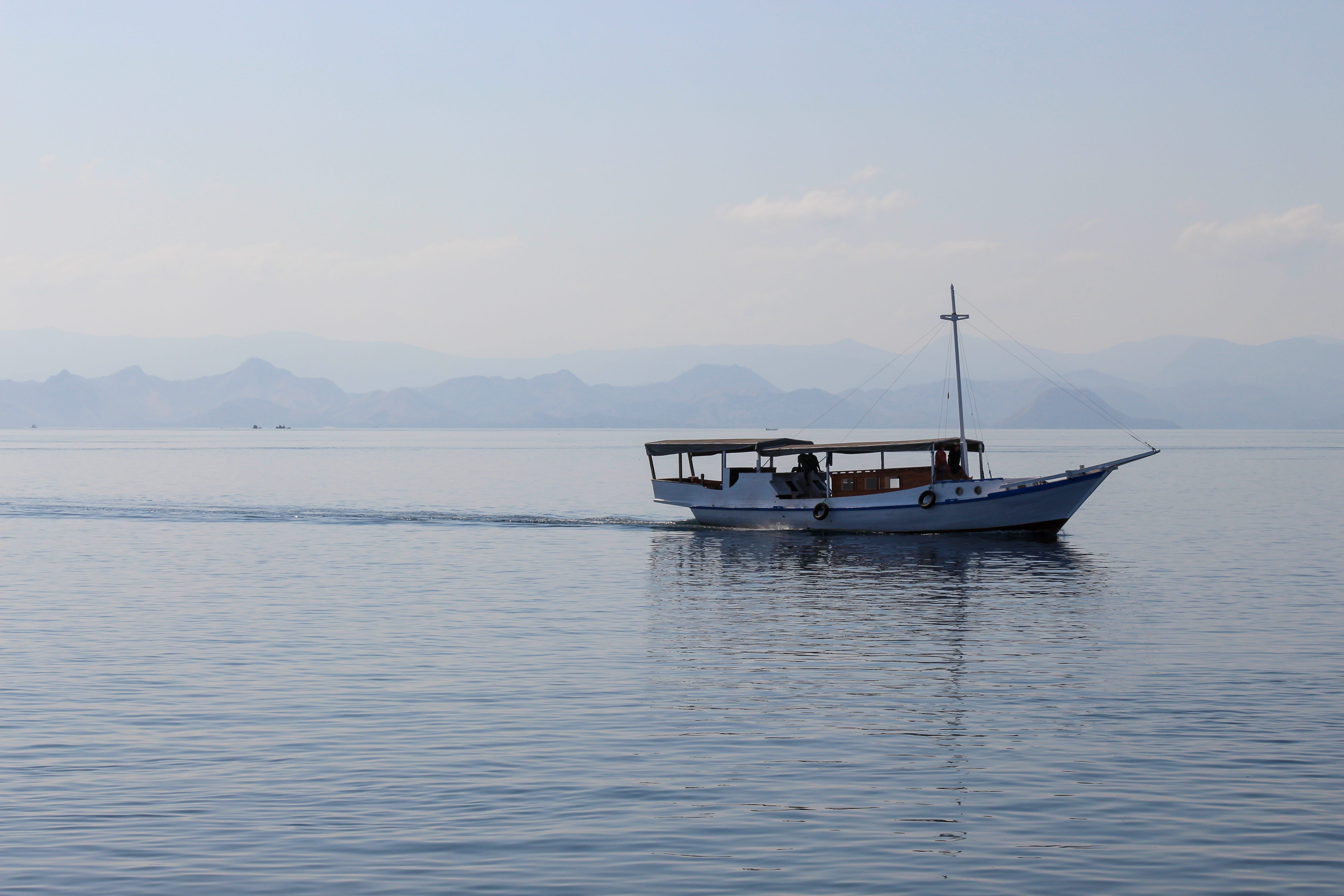
The next morning, I went down to the harbor and saw the same man from the dive shop. I threw my bag on the boat, and we left without discussing when we would be back.
There were only a handful of us: the man from the shop, a driver, a deckhand acting as spotter, and four guests. Komodo is considered an advanced diving destination. Not because of depth, but because of its strong, shifting currents and fast-moving drift dives. It was exactly why I wanted to be there. Three months earlier, my Master Scuba Diver card had arrived in the mail, and this was the first place I had come where it felt like I might be able to put the advanced skills to use.
We slid back toward the park, my focus shifting from the islands to the water between them. The chain sits at a junction where the Indian and Pacific Oceans meet, forcing tidal flow through the narrow channels between Komodo, Rinca, and Padar. That exchange pulls nutrients up from depth, feeding the reefs and concentrating marine life. It also means the water beneath the surface is rarely still.
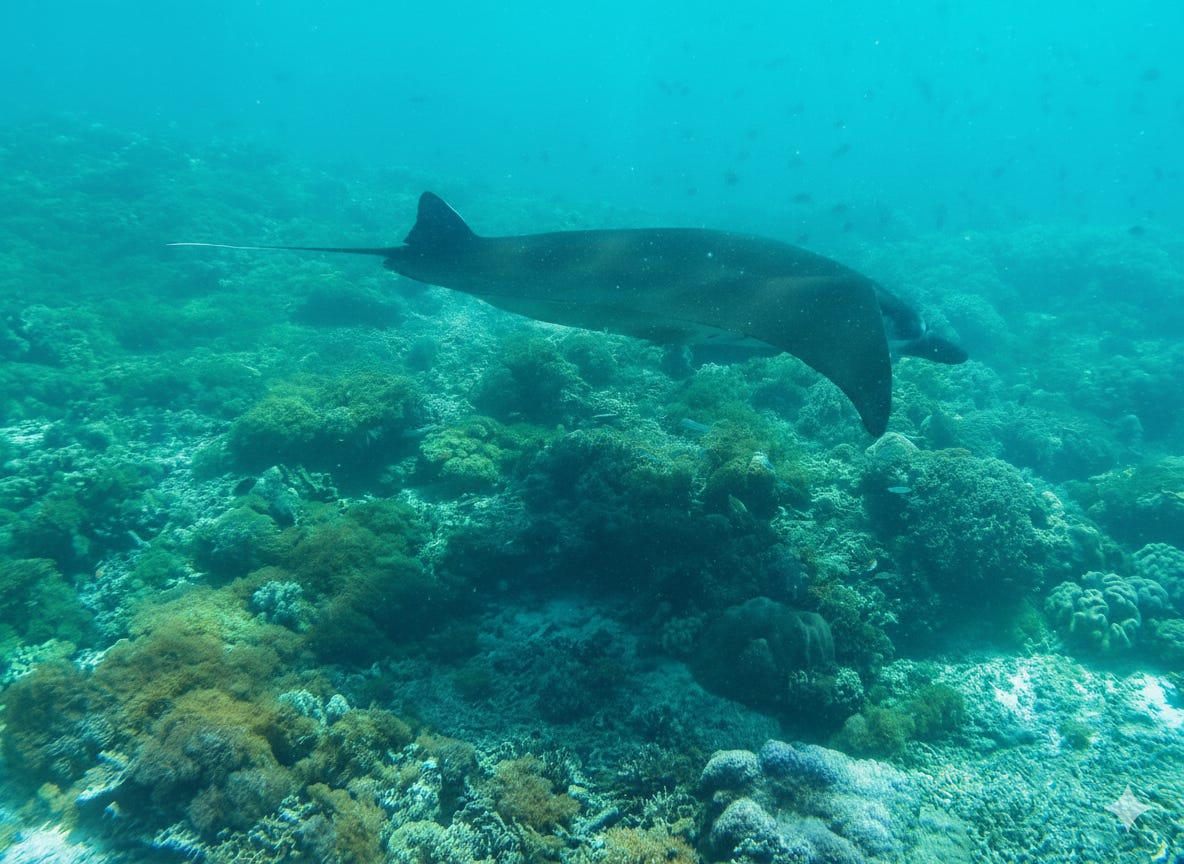
Our first site was near Mawan, where manta rays gather.
We entered along a sloping reef. The current was already running.
You don’t swim against it. You check your depth, your air, and your position relative to the others. Then you let it carry you.
Manta rays moved through in slow arcs, circling back through the same stretch of water. Five passed through while we were there. They held themselves in place against the flow in a way we couldn’t. Cleaner fish worked along their undersides as they passed.
We stayed low and slid by.
The next dive dropped us into a channel off Tatawa Besar, where the current accelerates as it is forced between islands. You felt it immediately. We held close to the reef at the start, then let go at the edge and were flung into the open water as if from a cannon.
Sharks worked the current while schools of fish faced into it and held position. The same forces that shaped the islands above were moving here too, just compressed and faster. Komodo dragons are good swimmers and can swim between these islands, but they don’t hunt in the water, so in that regard, I was happy not to have to worry about carrying a forked stick.
There were more dives after that, all of them shaped by the same conditions.
As we rested on the boat, I looked over at the man from the dive shop, who had become my dive partner for the trip. He gave no indication of when we would be back.
I kept trying to pin down when things would start, when they would end, and how long anything would take.
It never quite worked.
The boats left when they were ready. The hikes on the islands ended when they ended. Underwater, you surfaced where the current took you.
Since then, more people have come, and Labuan Bajo has grown. Flights are easier. A daily cap is coming with bookings and time slots.
Inside, our schedules don’t apply.
The dragons still wait. The current still runs.
On our last evening back in Labuan Bajo, I passed the dive shop again. The same man was there.
He looked up and nodded.
I didn’t ask when anything would happen.
The Diva of Labuan Bajo didn’t need to.
Great stuff, Scott! And more motivation to take that first scuba class.
I've wanted to visit Komodo for a long time and now feel the push to make it happen. Thanks for taking us all along with you.